7.2
Review: Emergency Room Simulator
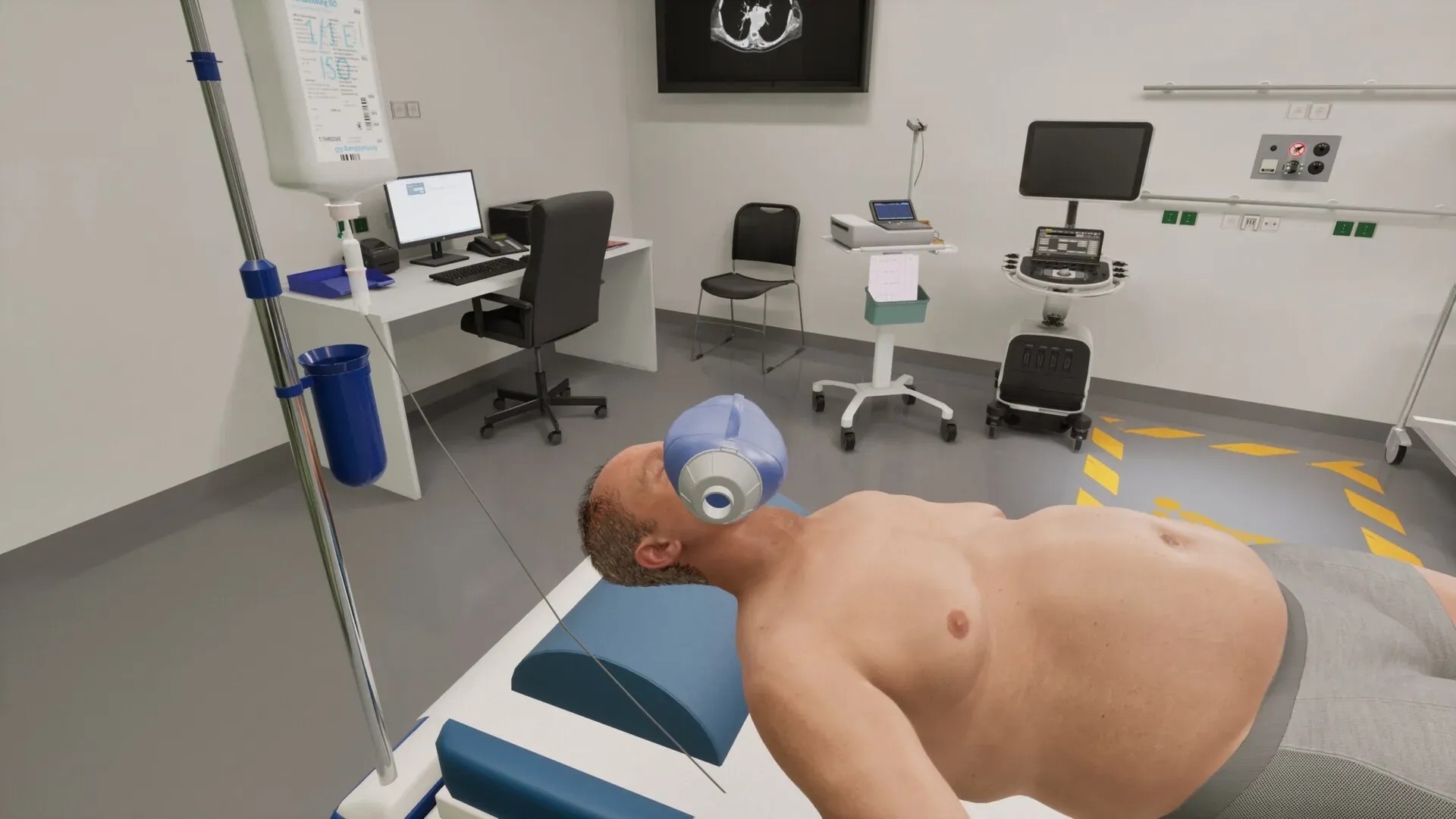
A hospital is an excellent location for a simulator. Where we now have numerous simulation games in which we crawl behind the wheel of trucks, run shops, remodel houses or perform all kinds of other professions, the work of a doctor is relatively limited. Emergency Room Simulator is trying to change that. The game does not simply let you run a hospital, but actually put you in the shoes of a doctor in the emergency room. Patiënt come in with various complaints and it is up to you to find out what is going on and to carry out the right treatment.
Emergency Room Simulator was developed by Caipirinha Games and published by Aerosoft. The game appeared on August 13, 2026 and opts for a fairly practical approach to the medical profession. Instead of handling everything through menus, you walk through the hospital yourself, you talk to patient.ënt, run your tests and use your various medical devices. This makes the game feel more like a real professional simulator than a traditional management game.

The interesting thing about Emergency Room Simulator is that a patientënt doesn't simply enter with a large icon above his head indicating what's wrong. Examination of the patientënt is an important part of the gameplay. You need to collect information, listen to complaints, and then decide which investigations are needed. That can be something relatively simple, but you also get the opportunity to for example blood tests, röntgen photos, CT scans, echoes and ECGs.
This gives every patientënt initially something like a medical puzzle. You're trying to determine exactly what's going on based on the available information. That is probably also the part where Emergency Room Simulator is most interesting. It is not just about carrying out a series of actions, but also about the steps that ultimately lead to a diagnosis.
Upon arrival of a patientënt you get information and can then do further research yourself. Asking questions plays a role in this, as is actually looking at and investigating the patient.ënt. Your findings can be recorded in the patientënt file. Then you have to decide which steps follow.
That sounds pretty serious and at times Emergency Room Simulator actually feels like some kind of interactive introduction to working on an emergency. Only do not expect a medical training programme that simulates every aspect of the course to the smallest detail. The game tries to stay accessible. This allows players without a medical background to understand what to do.

This accessibility is both a strength and a weakness. On the one hand, it ensures that you do not first need to study tens of hours of medical theory before you üa patient at allënt can help. On the other hand, it means that experienced simulator fans may run against the boundaries of the system faster. Anyone who expects an extremely in-depth medical simulator in which almost every decision can be made completely independently will find that Emergency Room Simulator ultimately offers more structure than the initial impression might suggest.
Actual treatment of patientsëNent's pretty hands-on. You don't walk to a patient alone.ënt to then press a button with 'Treat'. Different procedures consist of multiple steps. For example, wounds can be cared for and stitched, bandages should be applied and medication administered appropriately. As a result, the game actually tries to make you feel like you're the one doing the treatment.
Especially during the first few hours that works well. Performing a medical procedure for the first time is interesting because you still have to find out exactly what is expected of you. You pack materials, use medical devices and follow the necessary steps. This creates a tangible feeling that fits well with a simulator. You're actively working on the patient.ënt instead of only serving menus.
The downside is that over time, actions become less special. Procedures that are interesting the first few times can start to feel repetitive when you have to perform them regularly. That's an important problem for a simulator like this. A simulator is largely about repetition, but this repetition must be captured by sufficient variation, unexpected situations and systems that respond to each other.

Emergency Room Simulator still has room to grow. The basis is interesting, but the longer you play, the clearer where the boundaries lie. More different patientsëng, disease, complications and unexpected developments could significantly increase the lifespan. When you recognise too quickly what steps are required in a particular situation, the medical research slowly turns into the completion of known procedures.
That's too bad, because the diagnostic part has enormous potential. The best scenario is when you really need to think about the information you've collected. A complaint may have several causes and the exclusion of possibilities should create tension. When a game does this right, even an apparently simple patient canëGetting interesting.
Emergency Room Simulator also tries to add urgency. Not every patientënt walks in quietly with a complaint that you can think about extensively. There are also situations where rapid action is necessary. CPR is a clear example of this. At such moments the pace changes and you have to react immediately.
That variety between quiet diagnostics and acute emergencies is one of the stronger ideasën of the game. Emergency services should feel unpredictable. One minute you're looking at a relatively quiet patientënt and just a moment later a situation can arise in which every second is important. When Emergency Room Simulator manages to hit that switch well, the hospital concept comes into its own.
Yet that feeling of hectic could have been worked out even more strongly. A real emergency is not just about ééNice patient doctorënt na patiënt finishes. Everything happens at the same time. PatiëThey wait, colleagues move through the hospital, new cases come in and priorities can suddenly change. The game sometimes gives the impression of a functioning hospital, but does not constantly know to create chaos and livelinessëRun which you would expect at this location.

This can sometimes cause the hospital environment to appear somewhat empty or static. Visually it is clear what everything should be and the medical equipment helps with the atmosphere, but the world around the player should be more dynamic. More staff who are visibly carrying out their own duties, more activity in the corridors and more events outside your direct mission would greatly help their credibility.
Graphically, Emergency Room Simulator is functional. This is not a game you buy to view technically spectacular environments or photorealistic characters. The hospital rooms are clearly designed and the equipment is recognizable, so the graphics perform their main task. You can see where you are, what equipment you use and what to do.
For a simulation game, that doesn't have to be a big problem. Gameplay and interaction are ultimately more important than extremely detailed faces or impressive lighting effects. At the same time, better animations and more variation in patients would beëThe presentation will be more convincing. When you spend a lot of time looking at and treating people, limited animations and reuse are more obvious.
The first person presentation will help to bring you closer to work. You're walking to Pati.ëYou're literally between the hospital beds. Especially in combination with interactive medical procedures, this ensures that Emergency Room Simulator has more immersion than when everything would take place from an overview screen.
The control is very important. Because you need to use objects regularly and perform different steps of procedures, interaction must be smooth. Unfortunately, that doesn't always feel so sophisticated. Especially when a procedure specifically expects you to perform a specific action, uncertainty about what the game specifically requires of you can arise. An action that you think you have done correctly is not always recorded immediately.

That can be pretty frustrating. In a game that focuses on performing procedures, the difference between a player's medical error and an unclear game interaction must be crystal clear. When you get a patientënt mishandled because you yourself made a wrong choice, that makes sense. When you get stuck because an assignment doesn't seem to respond properly, a large part of the immersion disappears.
Therefore, technically Emergency Room Simulator shows that there is still room for improvement. Haperings, glitches and assignments that do not always respond reliably can interrupt the experience. That is extra noticeable because the rest of the gameplay is relatively methodical. You're focused on a procedure, and that's when you notice a technical problem.
The interface also plays an important role. A medical simulator can easily drown in information. Symptoms, research results, possible diagnoses and treatments must all be presented intelligible. Emergency Room Simulator tries to keep this accessible, so you understand how the base works fairly quickly. It's nice for newcomers.
However, for players who are looking for maximum freedom, this guidance may feel somewhat restrictive. The ideal version of this concept would have different levels of support. Beginners could get comprehensive guidance, while experienced players would have to diagnose almost without help. This would also increase replayability.
The sound is mainly supportive. The hospital environment has functional audio and medical equipment contributes to the atmosphere, but does not expect audiovisual presentation of the level of a large AAA production. You don't have to. With a simulator like Emergency Room Simulator, it is especially important that sounds provide information and make the environment more credible.
At the same time, there is still profit in terms of atmosphere. An emergency can be a hugely intense place. Alarms, calls, footsteps, equipment and personnel responding to emergencies can create an impressive sound landscape togetherëRun. If these elements were used more convincingly and dynamically, the hospital would feel a lot more alive.
Another important aspect is educational value. Emergency Room Simulator is obviously a game and should not be seen as a replacement for a medical education, but you do come into contact with various researches, devices and treatment methods while playing. As a result, the game can make players curious about medicine and show how many steps a complaint and treatment can take.

That might be one of the best qualities. Many games reduce medicine to using a medkit or impressing één button. Here you should actually think about symptoms, tests and treatment. Even if the simulation doesn't go extremely deep on every level, the process consequently gets more appreciation.
The biggest challenge for the game is ultimately the amount of content. The concept can theoretically last hundreds of hours when there are sufficient signs of disease, injuries, patientënt types and complications are present. After all, any new condition can produce a new puzzle. When the offer is too limited, the opposite arises and the game becomes predictable.
More randomness could help. PatiëPatients with similar symptoms need not necessarily have the same condition. Investigations could sometimes produce unexpected results and a patientënt could deteriorate during treatment. As a result, you would be forced to constantly look at the situation again instead of memorizing a fixed roadmap.
A more extensive form of triage would also fit perfectly with the concept. Who do you treat first when multiple patientsëAt the same time need attention? What happens when you wait too long? Can situations escalate? Such systems would significantly increase the pressure while giving more meaning to your choices.
At the moment Emergency Room Simulator feels like an interesting base on which much can still be built. The foundation is right. The idea to combine diagnosis and treatment works, the interactive procedures fit perfectly with the genre and the hospital is an original environment for a professional simulator. The problem is that you regularly start to think about how much further this concept could go.
That doesn't mean there's nothing to do right now. On the contrary:ïBeing interested in medical subjects can get quite a bit of fun from examining and treating patientsëng. Especially the first time you use new equipment or perform an unknown procedure, the game has an attractive sense of discovery.
You just have to take into account repetition. Anyone who wants to play for tens of hours in a row will find procedures coming back faster and the surprise effect will diminish. Emergency Room Simulator works better when you play the game in shorter sessions. A few patientsëtreatment, some diagnosis and then stopping again fits better with the current pace than extremely long play sessions.
The value for money therefore largely depends on what you are looking for. Are you specific?ïInterested in medical simulation games, the concept is unique enough to deserve attention. If you are looking for an extremely extensive simulator in which you will encounter virtually unlimited new situations for months, it is wise to take into account the current constraints.
Moreover, the technical state remains an important focus. Bugs are annoying at many simulation games, but here they can directly affect the core of gameplay. Where a procedure consists of different precise steps, each step must function reliably. Updates that make interactions smoother and solve technical problems can therefore noticeably increase the quality of Emergency Room Simulator.

The game also has many possibilities for future expansion. New departments, extended trauma care, child care, more diagnostic equipment, more complex disease images and patientënt with multiple conditions at the same time would all fit logically within the existing concept. Even a carrièresystem with a gradual increase in responsibilities could be interesting.
CoöPerative gameplay would theoretically go fantastic with the concept. Along with other players a busy emergency manning, sharing tasks and at the same time multiple patientëTreatment of patients could greatly enhance the feeling of hospital chaos. However, Emergency Room Simulator is currently primarily a single-player experience, so that is mainly an example of how much potential has the basic idea.
And just that word, potential, keeps coming back throughout the experience. Emergency Room Simulator has a concept that is immediately understandable and yet hardly widely used by other games. Playing doctor in an emergency sounds almost self-evident to a simulator, but there are surprisingly few modern games that try this way.
Caipirinha Games therefore deserves credit for the chosen direction. The diagnostic process is not completely missed and treatments actually consist of actions. As a result, Emergency Room Simulator does not simply feel like a hospital management game from a first-person perspective. It's really trying to do something with the appeal itself.
At the same time, a good concept should eventually be supported by sufficient depth, variation and technical finishing. There is currently the biggest difference between what Emergency Room Simulator already is and what it could become in the future. More situations and less rehearsal are at least as important as solving bugs.
Anyone who comes in with the expectation to get a fully realistic emergency medical training expects too much. Anyone looking especially for an accessible medical simulator where it is nice to have a patientëTo investigate, diagnose and carry out treatments yourself, finds here a much more interesting experience.
Emergency Room Simulator manages to achieve something important for every professional simulator: After a while, you automatically start thinking in the logic of the profession. You don't just see a patientënt, but tries to link complaints to possible causes. You think about what research can provide useful information and what treatment subsequently makes sense. That feeling is the main reason why the game remains interesting despite its shortcomings.

It's just too bad the game doesn't constantly challenge you enough to continue using that knowledge. As soon as procedures become known and situations begin to repeat themselves, part of the research disappears. The solution is obvious: more variation, more complex cases and more consequences for choices.
Work is also needed in the technical field. A simulator stands or falls with reliable interactions. When you know exactly what you want to do, but the game doesn't cooperate, a realistic procedure suddenly turns into struggle with the control. Such moments must disappear as much as possible.
On the other hand, the moments when everything iséI come together well. A patientënt enters, you collect information, conduct targeted research, discover the cause of the complaints and then successfully perform the treatment. Then Emergency Room Simulator gives exactly the feeling on which the concept was built. You didn't win because you could shoot faster or jump higher, but because you investigated and solved the problem correctly.
That creates a different kind of satisfaction than many other games offer. A successful treatment feels like finishing a puzzle. Especially when you have come to the right diagnosis, that can be surprisingly satisfying.
Emergency Room Simulator is not a perfect medical simulator, but an interesting attempt to explore a genre where there is still plenty of space. The game has a good foundation, interactive treatments and a diagnostic system that actually lets players do something. There are technical problems, limited variation, repetitive work and a hospital that may sometimes be more lively.
For lovers of simulation games you can findïBeing interested in medicine is absolutely a title to keep an eye on. In its present form, it is mainly a solid simulator with clear growth pains. With enough updates, new patientëEmergency Room Simulator could become a much more complete medical simulator.
Review Details
Verdict
Emergency Room Simulator has a strong and original starting point and shows why the work on an emergency aid is excellent for a simulator. Examining patients, collecting information, performing diagnostic tests and eventually treating the patient forms a fun gameplay cycle. Especially when you first encounter a particular situation, making the right diagnosis can be surprisingly satisfactory.
The interactive procedures are an important plus. Instead of bringing medicine back to a collection of menus, the game is actually trying to get you to do actions. That makes the experience accessible, but at the same time more interactive than you might expect.
The main problem is that the strong base is not yet fully exploited everywhere. Repetition becomes noticeable over time, the hospital should be more vibrant and technical there are parts that need further finishing. More different diseases, injuries, complications and dynamic situations could significantly increase the lifespan.
Pros
Cons

Comments (0)
You must be logged in to post a comment.
Login to commentNo comments yet. Be the first to comment!
Want the latest news in your Discord community?
Add our bot and get our GameFeed instantly in your server.
Add the Discord botRelated Reviews